Energy & BESS · 1 Oct 2026 · 2 min read
BESS and the data center: beyond backup
Battery energy storage is moving from a resilience add-on to an active part of how critical facilities manage power.
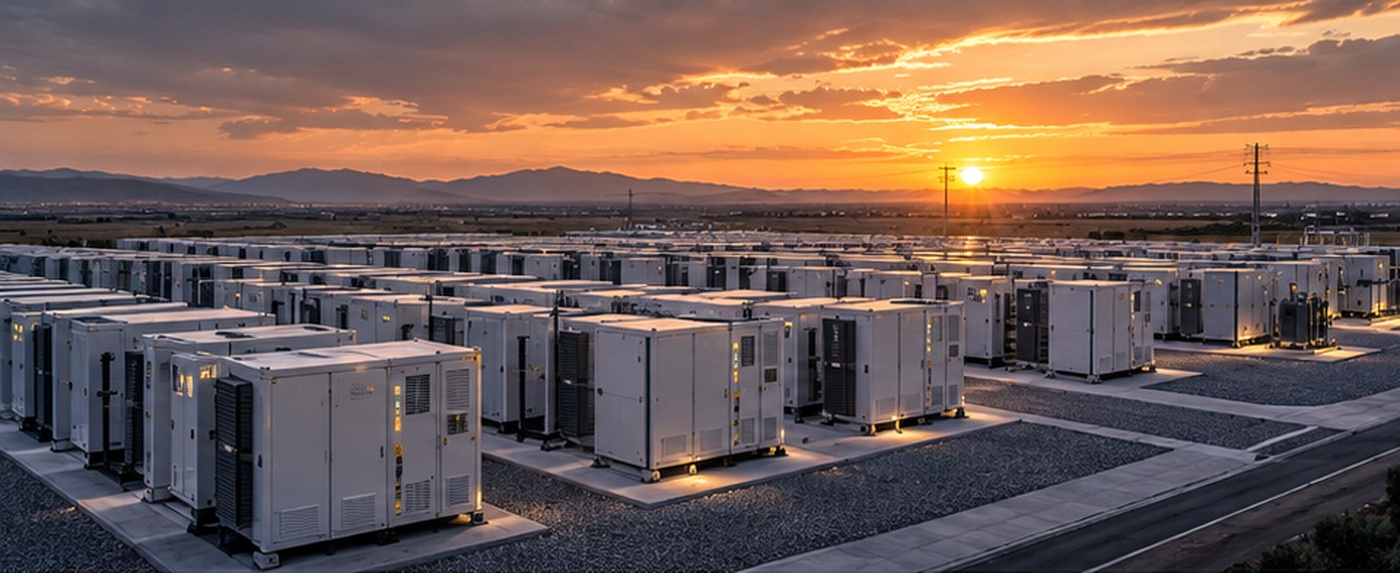
From standby to strategy
Battery energy storage systems (BESS) were long treated as a backup alternative. At utility scale and alongside large data centers, they increasingly play an operational role: smoothing demand, supporting grid connection limits and integrating on-site or contracted renewable supply.
Where BESS adds value
- Bridging interconnection gaps while grid upgrades are pending.
- Peak management to keep demand within contracted limits.
- Resilience layering together with UPS and generation.
Integration considerations
Storage touches protection schemes, energy management, fire safety, controls and utility agreements. Each of these is manageable on its own; the complexity is in how they interact. Defining control hierarchy and failure modes early is essential.
The takeaway
BESS works best when it is designed as part of the power architecture from the start, not attached at the end.
Planning critical infrastructure?
Talk to the SHARE NET integration team about scope, architecture and delivery.
Further reading

Operations & Lifecycle · 4 Oct 2026
Live maintenance: approve the system state, not just the task
Maintenance approval should account for temporary capacity, control dependencies and recovery—not only the equipment being serviced.
Read
Modular Infrastructure · 3 Oct 2026
Modular infrastructure: speed without shortcuts
Prefabrication can compress schedules, but only when integration and testing move into the factory too.
Read
Critical Power · 28 Sept 2026
Power is the new constraint for AI compute
Why grid access, not silicon, increasingly decides where and how fast AI capacity can be deployed.
Read